7 Vending Solutions Tips for Global Buyers Le Tach Vending Pte Ltd - Vending Machine Singapore, Hot and Cold Vending, Can Vending, Snack Vending

7 Vending Solutions Tips for Global Buyers

Global vending is no longer limited to snacks beside office elevators. Today, machines serve fresh meals, beverages, personal-care products, and everyday essentials in airports, hospitals, universities, and transit hubs. This expansion creates opportunity, but it also increases purchasing risk for international buyers.

The NAMA 2023 State of the Industry report estimated the U.S. convenience-services market at approximately $31.1 billion in 2022, showing strong demand for automated retail environments. Globally, Grand View Research identifies vending machines as a growing market, supported by cashless payments, connected equipment, and changing consumer habits. These figures are useful, but they do not replace local research. Market size varies widely by city, climate, income level, and product category.

That is why selecting Vending Solutions requires more than comparing machine prices. Buyers should examine payment compatibility, language settings, power requirements, product temperature control, cybersecurity, accessibility, and after-sales support. A machine installed in Singapore may need different cooling performance from one placed in Stockholm. A contactless terminal may also require different certifications across regions.

Details matter.

This guide presents seven practical tips for global buyers. It focuses on supplier verification, total ownership costs, compliance, logistics, maintenance, and customer experience. Some recommendations may appear obvious. They are often overlooked. No checklist is perfect, and even experienced buyers can underestimate spare-part delays or seasonal demand. Careful testing, transparent documentation, and local service partnerships can turn a promising Vending Solutions project into a dependable retail operation.
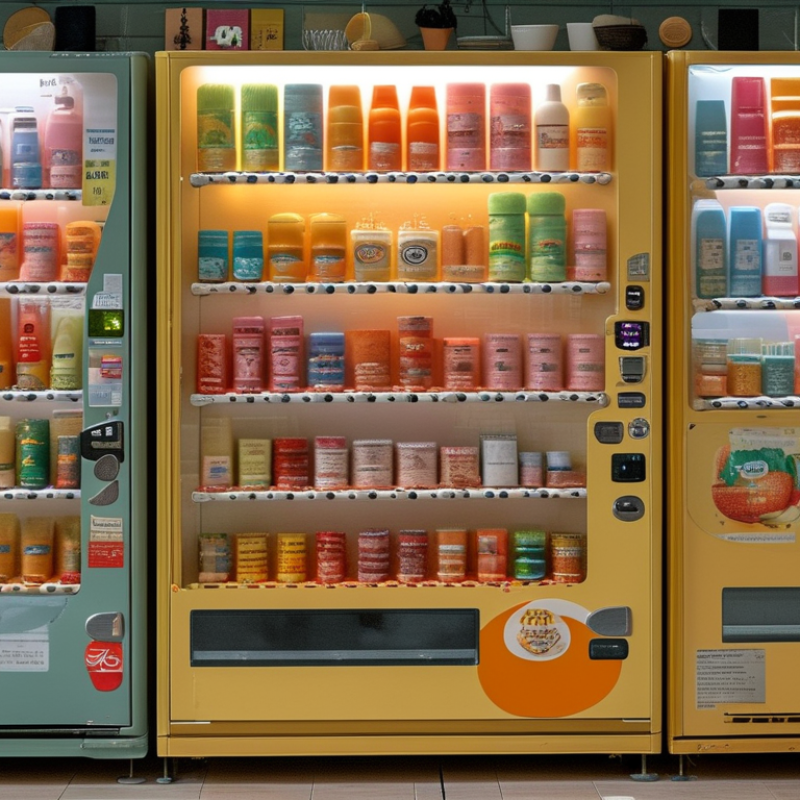
7 Vending Solutions Tips for Global Buyers

Define Your Target Market and Vending Business Goals

Global buyers should define the customer before selecting a vending machine. A hospital, university, factory, and transit station need different products, prices, and service schedules. Grand View Research valued the global vending machine market at approximately USD 21.84 billion in 2022. It also projected a 10.7% compound annual growth rate from 2023 to 2030. These figures show opportunity, but they do not guarantee local demand.

Tip: Write one specific buyer profile.

Measure foot traffic by hour, not only by location. Record age groups, payment preferences, purchase frequency, and nearby alternatives. NAMA’s 2023 State of the Industry report estimated U.S. vending sales at about USD 26.9 billion in 2022. It also reported strong growth in cashless transactions. Still, cashless payment acceptance may vary widely across countries. Test a small product mix for four to eight weeks. Review sell-through rates, spoilage, refunds, and service calls. My first forecast would probably be too optimistic.

Tip: Set measurable business goals.

Choose targets for monthly revenue, gross margin, machine uptime, and inventory waste. Define success before purchasing equipment. A busy site can still lose money when rent, electricity, delivery, and maintenance are ignored. Compare three scenarios: conservative, expected, and aggressive. Include local currency changes and import costs. Check consumer protection, food safety, accessibility, electrical, and payment requirements before launch. Reliable operators also plan restocking routes and emergency support. That detail is easy to underestimate.

7 Vending Solutions Tips for Global Buyers: Define Your Target Market and Vending Business Goals

Urban population share is a useful first-screening metric because vending machines generally perform better where people are concentrated in offices, transport hubs, campuses, hospitals, and retail areas. Compare this indicator with foot traffic, purchasing power, local payment habits, and your target payback period before selecting a market.

Data source: World Bank, Urban population (% of total population), latest available 2023 values for selected markets. The figures support market screening and are not forecasts of vending-machine demand.

Compare Machine Types, Features, and Product Compatibility

7 Vending Solutions Tips for Global Buyers

Compare Machine Types, Features, and Product Compatibility

Choosing a vending machine starts with the product, not the screen or cabinet design. Snack machines suit sealed items such as bars, packets, and small boxes. Beverage machines need stronger cooling systems and adjustable product lanes. Fresh-food machines require stable temperature control, clear expiration monitoring, and easier cleaning access. For fragile products, spiral delivery may cause damage. Elevator-style delivery is gentler, but it usually costs more.

Check compatibility in practical detail. Measure product height, width, weight, and packaging flexibility before requesting a quotation. A machine that accepts bottles may reject slim cans or soft pouches. Test the dispensing path with real samples, including the smallest and largest units.

Payment options should match local customer habits and support secure cashless transactions. Remote monitoring can report stock levels, temperature changes, and technical faults. Useful, but not always necessary for a low-volume location.

I once assumed a larger display meant better sales. That assumption was wrong. Location traffic, product visibility, refill time, and machine reliability mattered more.

Ask suppliers for test records, maintenance intervals, spare-part availability, and operating temperature ranges. Confirm power requirements before shipping across regions. Local voltage differences can create expensive delays. Also review language settings, warranty terms, and cleaning procedures. A small pilot run may reveal problems that product brochures hide. Perfect compatibility is rare; careful testing is more dependable.

Evaluate Suppliers, Quality Standards, and Customization Options

7 Vending Solutions Tips for Global Buyers

Evaluate Suppliers, Quality Standards, and Customization Options

Global buyers need more than attractive product photos. Supplier evaluation should begin with documented manufacturing experience, stable production capacity, and clear communication. Request factory videos, audit reports, and recent customer references. A reliable supplier should explain lead times, inspection stages, warranty terms, and spare-part availability without vague promises.

Ask for a working sample before placing a large order. Check door alignment, screen response, cooling performance, payment integration, and recovery after power interruption. Review quality systems such as ISO 9001, then confirm region-specific electrical, safety, and food-contact requirements. Certificates alone are not enough. Compare certificate numbers, testing dates, and product models. Small details matter. A loose hinge can become an expensive service problem.

Customization should solve a real operating need. Discuss local voltage, language settings, product dimensions, temperature ranges, branding areas, and remote monitoring functions. Confirm which changes affect minimum order quantities, tooling costs, software support, or delivery time. Keep the technical specification signed by both parties. It prevents uncomfortable disagreements later. However, buyers should avoid over-customizing early models. In one practical review, a more complex interface looked impressive but slowed customer use. That mistake was avoidable. Pilot testing with actual users can reveal awkward steps, unclear instructions, and maintenance problems before wider deployment. Evaluate the supplier again after the pilot, because performance in a showroom may differ from daily operation.

Calculate Total Costs, Import Duties, and Long-Term Returns

Global vending buyers should calculate landed cost before comparing machine prices. The WTO World Tariff Profiles 2023 reports a global average applied MFN tariff of about 7%. However, your actual rate depends on the HS code, origin country, product materials, and trade agreement. Add ocean freight, insurance, customs brokerage, port handling, value-added tax, installation, and local certification. A machine quoted at $6,000 may require another 20% or more before reaching its operating location.

Use a spreadsheet with three scenarios: normal, delayed, and unfavorable exchange rates. The World Bank’s Logistics Performance Index 2023 shows major differences in customs efficiency and delivery reliability between markets. These gaps affect storage fees and launch timing. I have seen buyers underestimate inland transport because the machine looked compact; a 300-kilogram unit still needs special handling, lifting equipment, and trained technicians.

Long-term returns require more than projected sales. Track daily transactions, average margin, electricity use, payment fees, maintenance visits, spare parts, and downtime. The International Energy Agency reported that global electricity demand grew in 2023, making energy efficiency increasingly relevant to operating budgets. Test one location for 90 days before scaling. A simple payback model can divide total installed cost by monthly net profit, but it may still be optimistic. Weather, seasonality, vandalism risk, and weak foot traffic can change the result quickly. Recheck assumptions every quarter.

Verify After-Sales Support, Compliance, and Global Logistics

7 Vending Solutions Tips for Global Buyers

Verify After-Sales Support, Compliance, and Global Logistics

A vending machine is a long-term service asset, not only a shipped cabinet. Before ordering, ask for a written after-sales plan. It should define response times, remote diagnosis, technician coverage, spare-part locations, and warranty exclusions. Request a parts list for refrigeration units, payment modules, screens, locks, and control boards. A practical test is simple: ask how a failed door sensor will be replaced in your target country. Vague answers are warning signs.

Tip 1: Check compliance before payment. Confirm electrical safety, electromagnetic compatibility, energy requirements, accessibility rules, and payment-data obligations. Requirements differ by market and product configuration. Ask for current test reports, declarations, manuals, and labels. The World Bank’s 2023 Logistics Performance Index assessed 139 economies across customs, infrastructure, services, and timeliness. These factors can affect delivery and installation planning. Documents matter.

Tip 2: Audit logistics as carefully as the machine. Around 80% of global merchandise trade by volume moves by sea, according to UNCTAD. Confirm the delivery term, port responsibilities, insurance, crate dimensions, humidity protection, and customs classification. Require shock indicators when the equipment includes glass or refrigeration. Tip 3: Build a local service buffer. Keep critical parts nearby and agree on escalation contacts. A 48-hour promise may exclude weekends, remote islands, or customs delays. I have seen attractive service terms fail because those exceptions were hidden. Recheck every assumption with a local installer before signing.

7 Vending Solutions Tips for Global Buyers - Verify After-Sales Support, Compliance, and Global Logistics

No. Buying Tip What to Verify Practical Evidence or Benchmark Key Documents Buyer Action
1 Define the operating environment Check indoor or outdoor installation, ambient temperature, humidity, dust exposure, power supply, floor loading, and network availability. Request rated operating temperature and humidity ranges, ingress-protection information where relevant, electrical input data, machine dimensions, and shipping weight. Technical data sheet; installation guide; electrical specification; environmental rating report. Match the specification with the actual site survey before approving the purchase order.
2 Verify after-sales support Confirm warranty duration, coverage, response times, spare-parts availability, remote diagnostics, and technician training. A clear service-level agreement should define acknowledgement time, troubleshooting process, escalation contacts, excluded parts, and repair or replacement procedures. Warranty terms; service-level agreement; spare-parts list; maintenance schedule; training plan. Obtain written support commitments and test the support channel before placing a large order.
3 Check payment and software compatibility Confirm compatibility with local currencies, cashless payment methods, tax rules, receipt requirements, telemetry systems, and data-protection obligations. Require a live demonstration of payment acceptance, refund handling, offline operation, transaction reporting, user permissions, and software updates. Payment-integration specification; software license terms; API documentation; cybersecurity and privacy statement. Test the complete payment workflow using the target market's currency and payment methods.
4 Validate market compliance Identify electrical, radio, electromagnetic-compatibility, product-safety, environmental, accessibility, and labeling requirements in the destination market. For European shipments, confirm applicable CE-related requirements and declarations. For other markets, verify the locally applicable approval, marking, and conformity rules rather than relying on a generic certificate. Declaration of conformity; test reports; bill of materials; user instructions; product labels; recycling or restricted-substance documentation. Use an independent compliance review when the machine includes refrigeration, wireless modules, payment terminals, or heating components.
5 Plan global logistics carefully Confirm packed dimensions, gross weight, pallet requirements, loading method, customs classification, insurance, destination charges, and delivery terms. A standard 20-foot dry container has roughly 33 cubic metres of internal volume, but usable capacity depends on machine dimensions, packaging, loading pattern, and payload limits. Commercial invoice; packing list; transport document; customs code; certificate of origin where required; insurance certificate. Compare total landed cost under clearly stated Incoterms and confirm who handles customs clearance and final-mile delivery.
6 Control quality before shipment Check manufacturing consistency, product dispensing accuracy, refrigeration or heating performance, door locks, sensors, payment functions, and packaging strength. Use a pre-shipment inspection with a written acceptance checklist, serial-number records, photographs, functional tests, and packaging verification. Approved sample; inspection checklist; factory acceptance test; serial-number list; packaging specification. Approve shipment only after critical defects are corrected and inspection results are documented.
7 Build a measurable rollout plan Define pilot quantity, installation schedule, replenishment process, uptime target, service response, inventory levels, and performance reporting. Track availability, failed transactions, product spoilage, restocking time, service tickets, refund rates, and revenue per machine using the same reporting period. Pilot acceptance criteria; operating procedures; KPI dashboard; incident log; replenishment and maintenance plan. Start with a controlled pilot, review results after a defined operating period, and scale only when service and compliance targets are met.

Note: Compliance requirements, customs procedures, taxes, and delivery conditions vary by destination and product configuration. Confirm the current local requirements with the relevant authorities, testing bodies, customs broker, and logistics provider before shipment.